PlayOJO Trust and Licence UK: Operator, UKGC Record and Player Protections
 Available in GB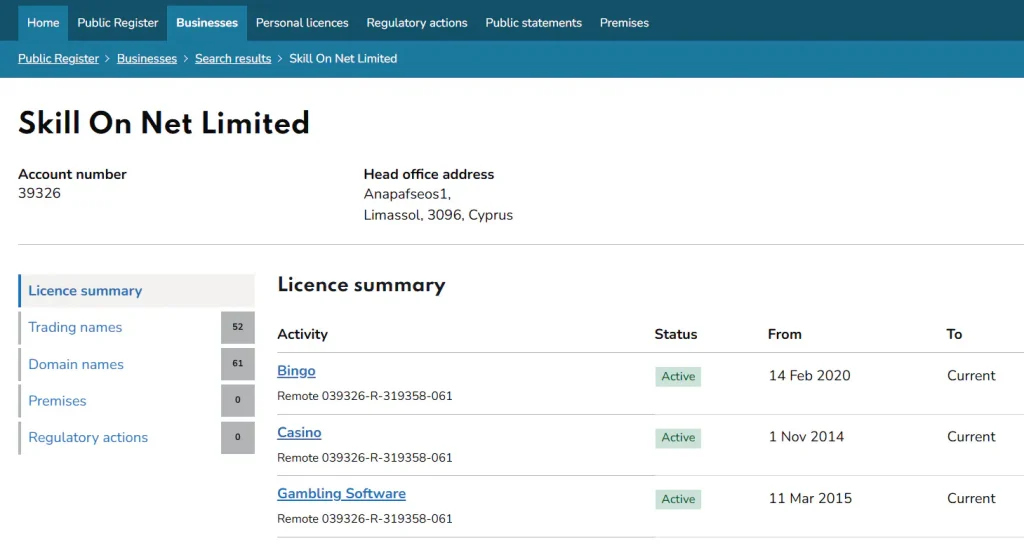
Operator record, regulation and practical protections
PlayOJO is listed in the UK Gambling Commission public register as a trading name of Skill On Net Limited, account 39326. The current register shows Casino Remote licence 039326-R-319358-061 as Active and lists both www.playojo.co.uk and www.playojo.com among the operator’s active domains. That is meaningful evidence for players in Great Britain because it ties the PlayOJO brand to an identifiable licensed business and the UKGC rulebook. It is not a guarantee that every transaction will go perfectly, and it should not be stretched to Northern Ireland, which sits outside the UKGC’s Great Britain licensing geography.
Table of Contents
- What the public register currently verifies
- Who operates PlayOJO in Great Britain?
- What an active UKGC licence means in practice
- Great Britain is the correct regulatory scope, not all of the UK
- Safer gambling controls are part of the trust check
- Advertising rules add another layer of consumer protection
- Support and complaints: a practical escalation route
- Do ordinary PlayOJO winnings attract UK Income Tax?
- How to read the UKGC register without overclaiming
- What PlayOJO's UKGC record does and does not prove for Great Britain players
What the public register currently verifies
| Register field | Current record | Why it matters |
|---|---|---|
| Legal business | Skill On Net Limited | Identifies the licence holder behind the brand |
| UKGC account | 39326 | Provides a stable regulator reference |
| Casino Remote licence | 039326-R-319358-061 – Active | Confirms current remote casino permission in Great Britain |
| Trading name | playojo – Active | Connects the consumer-facing brand to the licence holder |
| Domains | www.playojo.co.uk and www.playojo.com – Active | Connects the named sites to the registered business |
The UK Gambling Commission public register lists Skill On Net Limited under account 39326 and shows the licence status, licensed activities, trading names and registered domains attached to that business.
The same record lists playojo as an active trading name and includes www.playojo.co.uk and www.playojo.com among the operator domains. Those fields connect the consumer-facing brand and domains with the licensed business rather than leaving the brand name detached from the licence holder.
The licence entry therefore links the operator name, account number, remote casino permission, trading name and listed domains in one public record. Those fields are the concrete basis for the Great Britain licensing position described here.
Who operates PlayOJO in Great Britain?
The legal name that matters for Great Britain licensing is Skill On Net Limited. The UKGC public register identifies Skill On Net Limited under account 39326 and shows playojo as an active trading name. It also lists the PlayOJO .co.uk and .com domains as active domains associated with that account.
This distinction between brand and operator is useful when reading terms, resolving account questions or checking a licence. A customer usually sees the PlayOJO name, but the regulatory record is attached to the legal business. That is why a search only for a brand logo or homepage footer can be less informative than a public-register search that connects the brand, operator, trading name and domains.
The register currently shows active Casino Remote licence 039326-R-319358-061. It also lists remote bingo and gambling-software permissions under the same licence number. For PlayOJO’s casino service, the active remote casino permission is the relevant licensed activity.
The full PlayOJO review covers the wider product experience. The regulator record separately establishes the operator, active licence status and Great Britain regulatory scope.
What an active UKGC licence means in practice
An active UKGC remote casino licence means the operator is licensed to provide the relevant remote gambling facilities to consumers in Great Britain and is subject to the Commission’s licence conditions, codes and technical standards. That framework covers more than a logo at the bottom of a page. It includes requirements around customer identity, complaints handling, safer gambling systems and the way remote products are operated.
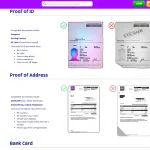
One practical example is identity verification. UKGC rules require remote operators to obtain and verify enough information to establish a customer’s identity before the customer is permitted to gamble. The core information includes name, address and date of birth. That rule is why verification is part of the account journey rather than an optional courtesy. The PlayOJO registration guide covers the sign-up stage, while the separate KYC and documents page explains the current PlayOJO document examples.
Another example is complaints handling. Licensed operators must maintain fair, open and transparent complaints procedures. UKGC guidance says the full internal complaints process should take no more than eight weeks and that unresolved gambling-transaction disputes must be capable of referral to an approved Alternative Dispute Resolution provider. For a dispute that reaches the end of the operator’s complaint process, use the ADR details supplied by PlayOJO for that case. Keep a written record of the complaint, the relevant transaction or account event and the responses received.
A licence therefore creates an accountable framework, but it does not promise that a customer will agree with every decision. The UKGC itself says it does not resolve individual gambling-transaction complaints. Those disputes begin with the business and can then move through the applicable ADR route.
Great Britain is the correct regulatory scope, not all of the UK
The phrase “UK licence” is often used casually, but the UKGC licensing geography here is Great Britain: England, Scotland and Wales. Northern Ireland has separate gambling legislation. That difference matters because a regulator statement about Great Britain should not be rewritten as a blanket claim covering every part of the United Kingdom.
For PlayOJO, the public register establishes the Great Britain licence position. It does not determine how every promotion, payment method or product is treated in Northern Ireland; those conditions depend on the relevant product or offer terms. The same principle applies in reverse: a promotion-specific Northern Ireland exclusion does not prove that the whole PlayOJO service is generally unavailable there.
Skill On Net Limited holds the active UKGC remote casino licence under which PlayOJO is registered for the Great Britain regulatory market. That scope should not be extended to Northern Ireland.
For this licensing context, Great Britain means England, Wales and Scotland. Northern Ireland has a separate gambling-law framework, so the UKGC remote casino licence should not be described as if it covered every part of the United Kingdom.
That distinction also keeps promotion conditions separate from regulation. A Northern Ireland exclusion in a specific welcome offer is a condition of that promotion; it is not the same thing as the geographic scope of the Great Britain licence.
Safer gambling controls are part of the trust check
PlayOJO currently provides daily, weekly and monthly deposit limits, and its help material also points to player-limitation and self-exclusion tools. Those product controls sit alongside UKGC requirements that licensed businesses identify and respond to indicators of gambling harm.
One current Great Britain rule is the financial vulnerability check threshold. From 28 February 2025, the UKGC rule requires the check when a customer’s deposits minus withdrawals exceed £150 in a rolling 30-day period, unless an applicable recent check has already been completed. The minimum check uses public-record information for significant indicators of financial vulnerability. It should not be described as the same thing as a full manual affordability investigation.
Deposit-limit rules are also changing. As of 27 September 2026, revised UKGC RTS 12B requirements are scheduled to take effect on 30 September 2026. The change standardises the meaning of a deposit limit around gross deposits and requires the system to stop further deposits once that limit is reached until the limit period restarts or the customer increases it subject to the standard cooling-off rule. The requirement takes effect on 30 September 2026, so before that date it remains an upcoming change rather than a current requirement.
The timing distinction matters for players setting deposit limits: existing requirements apply until the change takes effect, and the revised rule applies from 30 September 2026.
Advertising rules add another layer of consumer protection
Casino regulation is not limited to deposits, identity checks and withdrawals. UK gambling advertising also has protections designed to reduce exposure and appeal to under-18s. The CAP Code prohibits gambling marketing communications from being likely to have strong appeal to children or young persons, particularly through links with youth culture, and prohibits directing gambling advertising at under-18s through media selection or context.
The ASA and CAP continued active enforcement in 2026, including refreshed guidance and monitoring of gambling content marketing. That matters because a licence does not make every advert automatically compliant. Advertising remains subject to a separate rules and enforcement framework, and individual campaigns can still be challenged or withdrawn when they breach it.
For a player assessing trust, the practical takeaway is that there are several layers of accountability: the operator’s licence, the UKGC rulebook for licensed activity, and advertising standards for marketing. None should be treated as a substitute for reading the actual terms that apply to a particular offer or transaction.
Support and complaints: a practical escalation route
PlayOJO currently publishes [email protected] and logged-in live chat as customer-support routes. If the issue is a simple account question, payment query or request for clarification, starting with the channel that can access the account is usually more useful than contacting a regulator.
For a formal complaint, keep the issue specific. Record the date, the transaction or account event involved, the relevant terms and the response you received. If the matter concerns a deposit or withdrawal, the payments and deposits page gives the current funding context, while the withdrawal guide separates method availability, minimums and verification from complaint procedure.
UKGC guidance says the gambling business has up to eight weeks to resolve the complaint through its procedure. If the dispute remains unresolved, the operator should provide information on the relevant approved ADR route. The Commission does not make the decision on an individual gambling transaction, so sending a transaction dispute directly to the regulator is not the same as using the operator and ADR process.
Do not confuse customer-service dissatisfaction with every type of ADR dispute. UKGC public guidance notes that ADR focuses on eligible disputes and does not accept every customer-service issue. If a case reaches that stage, use the operator’s current deadlock or escalation information and check the ADR provider’s own eligibility rules.
Do ordinary PlayOJO winnings attract UK Income Tax?
For an ordinary individual punter, HMRC guidance treats gambling winnings as generally outside Income Tax. HMRC’s Business Income Manual states that betting and gambling, by themselves, do not normally constitute trading, and its miscellaneous-income guidance specifically excludes gambling winnings from wagers and bets from the general sweep-up charge.
Not every money flow connected with gambling is automatically tax-free in every possible commercial structure. HMRC distinguishes the ordinary punter from organised business activity, and a separate trade can create different tax consequences. The ordinary-player position described here is not personal tax advice.
For most readers asking whether a routine casino win itself is taxed as ordinary gambling winnings, the useful answer is that HMRC guidance generally places those winnings outside Income Tax for the individual punter. Personal circumstances involving a business, employment, promotional activity or another taxable source can require professional advice.
How to read the UKGC register without overclaiming
A regulator record is strongest when used for narrow questions. It can show the licensed legal business, the account number, the licence type and status, registered trading names and listed domains. It can also show regulatory actions recorded against the business. Those are concrete fields that can be checked again later.
What it cannot prove is that every customer will have a good experience, that no operational error will happen, or that a withdrawal can never be delayed for a legitimate verification or legal reason. It also cannot prove that every marketing statement is current, that every game is available to every account or that a specific complaint will be decided in the player’s favour.
The register shows Skill On Net Limited as the registered business, account 39326 as current, playojo as an active trading name and the remote casino licence as active. A particular bonus, KYC request, payment or dispute is governed by the terms and rules relevant to that separate issue.
What PlayOJO’s UKGC record does and does not prove for Great Britain players
The current UKGC register links PlayOJO to Skill On Net Limited, account 39326 and active Casino Remote licence 039326-R-319358-061. That public record establishes the operator and Great Britain licence position independently of marketing badges or third-party claims.
The practical protections around that licence include identity-verification rules, complaints and ADR requirements, safer-gambling controls and financial-vulnerability checks, while advertising is also subject to separate CAP and ASA rules and current HMRC guidance generally places gambling winnings for an ordinary individual punter outside Income Tax.
The active Great Britain licence does not cover Northern Ireland and does not guarantee the outcome of an individual complaint, payment request or promotion claim.
The register identifies who holds the licence, the licensed activity, its status and the trading names and domains attached to the record.
The full PlayOJO review covers bonuses, games, payments and mobile access alongside this licensing context.